Modern Languages
Modern Languages — Hearing Better in Order to Speak Them Better
Text based on a booklet by the Société de Linguistique Appliquée*, ca. 1980, presenting the application of Dr Alfred Tomatis’s Electronic Ear to the learning of modern languages.*
“The voice contains only what the ear hears.”
— Dr Alfred Tomatis
Modern languages, it is known, must not be approached as dead languages. It is for this reason that a dynamic pedagogy has been put into operation, the impetus of which has been facilitated by the use of audio-visual techniques. These techniques, however, although having attained their aim on the visual plane, leave subsisting a great uncertainty as to the transmission of the oral message.
This is why one witnesses, in the field of language learning, so many failures, due principally to the impossibility of connecting linguistic structure to the structure of the nervous system.
Now, there exists a link between these two structures: the ear. But this linguistic receptor must still be able to reach its maximum effectiveness.
Such is the aim of the method proposed here: its purpose is indeed to introduce the subject into the sonic universe of the language he wishes to master. Then — but only then — the teaching of modern languages reaches its objective.
To integrate a language is to live it
To integrate a language is to be able to restore it ad integrum. It is a question, as may be imagined, of reproducing not only the letter but also the spirit of it. In other words, to possess a language one has decided to absorb is to use it to the point of expressing oneself, thinking, existing through it. For a modern language is not first an assemblage of words according to rules, but indeed a combination of signals, of groups of sounds destined to communicate to others the thought, feelings and will of each.
These signals, to be understood and integrated, must above all be heard correctly. But it is also necessary that the specific elements of the language — accent, rhythm and articulation — be reproduced with the greatest exactitude.
Consequently, to speak a language, if one must want to learn it, study it seriously, one must also be able to, in the most physical sense of the term.
The only resource, henceforth, is to invite the ear to penetrate into the sonic field of the language to be integrated.
The three laws of language
In the practice of occupational medicine, Dr Alfred Tomatis discovered three laws which bear his name and of which the first — fundamental — formed the subject of communications to the Académies des Sciences and de Médecine in 1957.
First law
“The voice contains only what the ear hears.”
This first law brings to light the relation between audition and phonation: I speak a language poorly because I do not hear it correctly.
Second law
“If one gives the ear the possibility of hearing correctly, one instantaneously and unconsciously improves vocal emission.”
In other words: I hear a language better, therefore I speak it better.
Third law (law of persistence)
“It is possible to transform phonation by an auditory stimulation sustained for a certain time.”
This stimulation is brought by the Electronic Ear. By listening to a language under the Electronic Ear, one succeeds in integrating it definitively.
These laws are supplemented by two discoveries:
-
The right ear is the directing ear which regulates language.
-
Each language presents specific sonic characteristics.
The Electronic Ear
The Electronic Ear is an apparatus essentially composed of amplifiers, an electronic gate, and channels comprising filters. The sonic impulse passes through the apparatus before reaching the subject’s ears by means of two earphones.
The successive passages of this impulse from one channel to the other are automatically regulated by the gate according to variations of intensity:
-
The C2 channel, which favours the low frequencies, ensures the relaxation of the muscles of the middle ear.
-
The C1 channel, which favours the perception of high frequencies, ensures their tension.
It is in fact a true micro-gymnastics of the muscles of the malleus and of the stapes.
The brain, receiving the sonic information after amplification and filtering within the Electronic Ear, restores this information, just as it has perceived it, to the larynx — whose phonation is thereby modified. The audition-phonation self-monitoring is engaged in an unconscious mimicry.
“The Electronic Ear allows the creation of the ambient climate so indispensable to the psychological imbibition of a foreign language. In a way, we recreate the auditory conditions of initial integration, those which permitted us the assimilation of our mother tongue.”
— Dr Alfred Tomatis, Congress of Modern Language Teachers, UNESCO Palace, 1960
Application to the integration of modern languages
The pedagogical application unfolds in three complementary stages.
1. The listening sessions
Their purpose is to do a global work of opening of the ear. They are conducted by hearing, through earphones, sounds passing through the Electronic Ear and coming from a tape recorder of very high quality, on which run tapes chosen according to an adapted programming.
2. The audio-vocal sessions
They progressively shape the ear so that audition profiles itself on the sonic scheme specific to the language. The process is the same as in the listening sessions, but in addition, “sonic blanks” allow the pupil to repeat into a microphone, itself connected to the Electronic Ear.
In this way, the subject hears and hears himself as he ought to speak; by mimicry, he thus improves his phonation unconsciously. These preparatory sessions moreover constitute an excellent prelude to a linguistic stay abroad.
3. The lessons of teaching proper
They may begin while the audio-vocal sessions continue. They are given, partially or wholly, under the Electronic Ear: the teacher and pupils communicate through the apparatus. On a perfectly prepared ground, the teacher can then transmit the culture, psychology, subtleties and all the specific elements of the language.
The Electronic Ear is thus at the service of the teacher, and not in competition with him.
— From a presentation booklet of the Société de Linguistique Appliquée* (Paris, ca. 1980), structured around the principles of Dr Alfred Tomatis and their application to the pedagogy of modern languages.*
Figures from the original document
Diagrams and illustrations from the PDF facsimile of the original article.
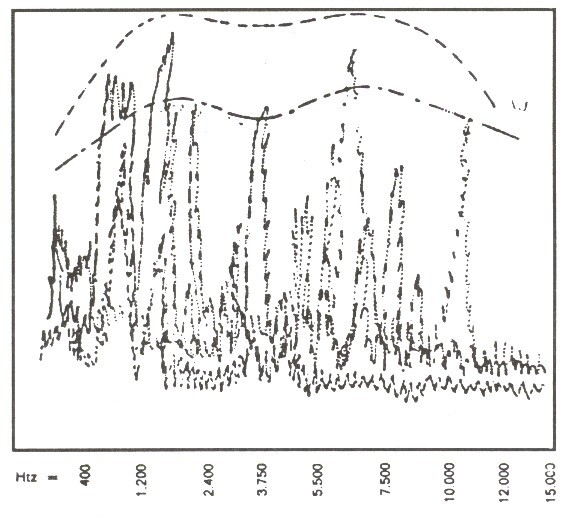
Figure 1 — facsimile p. 10
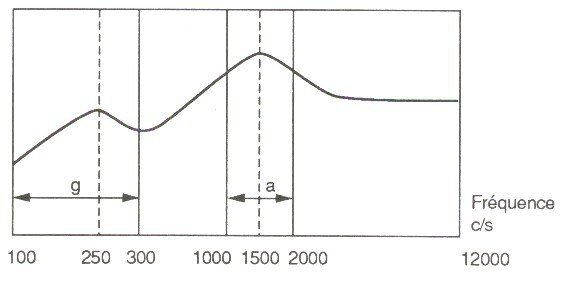
Figure 2 — facsimile p. 11
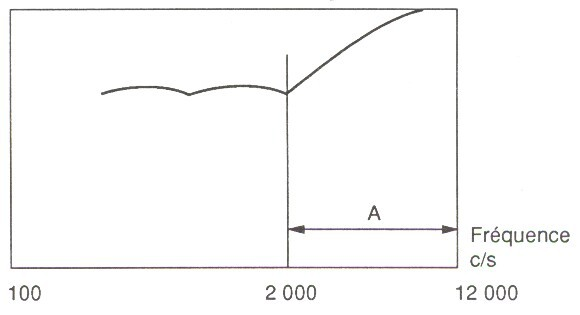
Figure 3 — facsimile p. 11
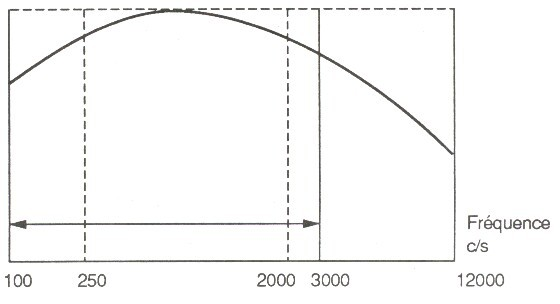
Figure 4 — facsimile p. 12
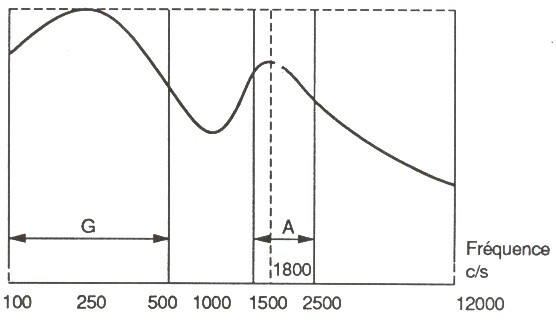
Figure 5 — facsimile p. 13
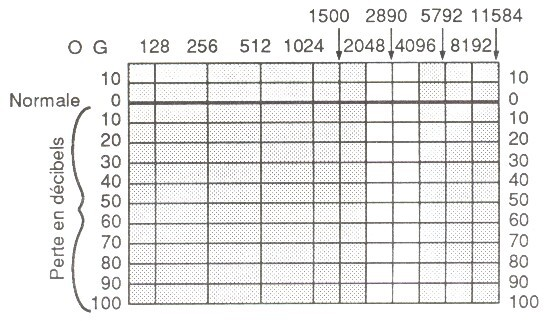
Figure 6 — facsimile p. 14
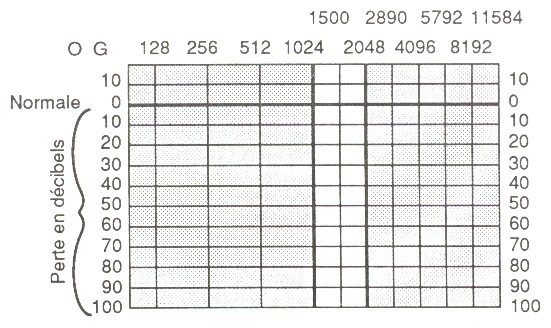
Figure 7 — facsimile p. 14
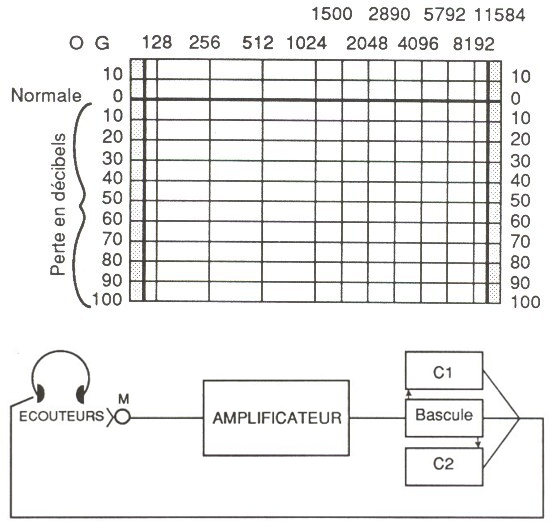
Figure 8 — facsimile p. 14
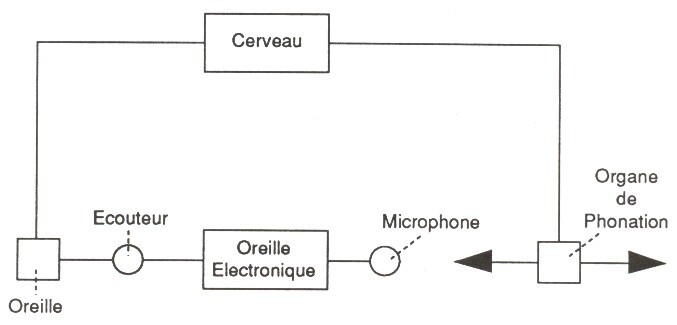
Figure 9 — facsimile p. 18