Treatment of dyslexia by the Tomatis Effect technique
Treatment of dyslexia by the Tomatis Effect technique (Gillis & Sidlauskas, Pau 1976)
Communication presented by Dr John S. Gillis, psychologist, University of Ottawa, under the direction of Dr Agatha E. Sidlauskas, Director of the Centre for the Study of the Child, University of Ottawa, at the 2nd National Congress of the Association Française d’Audio-Psycho-Phonologie, Pau, May 1976. (An original English version was presented under the title “Treatment of dyslexia by the Tomatis Effect technique”.)
Controlled experimental study — the first to directly manipulate the variables of the Tomatis method. Ten children of 8 years of age presenting serious reading difficulties are examined while reading under four conditions of auditory feedback: right ear with or without frequency modification, binaural listening with or without modification. After a four-month treatment (two sessions a day, every school day), reading improves significantly (vocabulary and comprehension move from 1.88 to 2.43 on the Gates-McGinitie), and preferential right-ear feedback as well as amplification of frequencies above 1000 Hz each produce a measurable gain of words read per minute. The children who best memorised the dichotic digits in the left ear are those who progressed most under the “right ear” condition — an empirical corroboration of the privileged role that Tomatis theory attributes to the right ear in reading.
Summary
With a view to controlling two important aspects of Tomatis’s approach in the treatment of reading disorders, 10 children were examined under four different conditions of auditory feedback while reading. It was discovered that easier reading tended to manifest itself when the feedback concerned principally the right ear, or when the amplitudes of frequencies above 1,000 Hz were increased relative to the lower frequencies. The improvement in reading on listening through the right ear proved more important in children who showed greater aptitude for the memorisation of digits presented dichotically to the left ear. The feedback of modified frequencies also enabled observation of a change in voice quality. The results were discussed on the basis of Tomatis’s theory concerning ear laterality and frequency modification.
I. Introduction
In the course of a medical practice of more than twenty years in Paris, Dr Alfred Tomatis developed a treatment programme that can effectively help a great number of children suffering from reading disorders. The research work presented here was undertaken with the aim of evaluating the effects of two dominant elements of this treatment: ear laterality and frequency modification.
Ear laterality
For several years, Tomatis had had to treat numerous opera singers who were having vocal difficulties. While he examined the voices of these singers, he noted that they sang better when they controlled their voice using their right ear rather than when they controlled themselves through the left ear (Tomatis 1953). Subsequently, in examining children with reading disorders, Tomatis noted that these children seemed to read better when they were allowed to use their right ear. He then began to apply techniques to develop in these children a greater use of their right ear. As McNeil and Hamre (1974) pointed out, there is now a literature showing that verbal or linguistic stimuli are reported more adequately when presented through the right ear. Besides the studies reviewed by McNeil and Hamre (1974), it has been found that the children with the best reading aptitudes tended, in contrast to others, to have better performances at the level of the right ear, both in dichotic listening and in monaural tests (Bakker et al. 1973, Bryden 1970, Zurif and Carson 1970).
Such findings come to support the theories that attribute to the right ear a predominant role in reading processes, such as those advocated by Tomatis. It is, however, useful to note that these studies do not involve a direct experimental manipulation of the variable of ear laterality. That is why it was decided to carry out a project in which ear laterality would undergo variations so that one could measure the possible influences on reading behaviour.
Frequency modification
Another aspect of Tomatis’s treatment programme that seemed to us to deserve careful empirical examination is the fact that he insisted on the importance of the different frequencies of sound stimulation (Tomatis 1974). The findings of research in this field are not as abundant as those concerning ear laterality. However, what has been outlined corresponds to Tomatis’s hypotheses. For example, in studying the eventuality of a relation between the listening possibilities and reading of certain children, Henry (1949) discovered that high-tonality loss and reading deficiency tended to manifest themselves in the same children. Up to now, as for ear laterality, no research had been carried out in which the frequency variable was systematically called into question to examine the possibility of a causal influence on reading behaviour. As a consequence, the second principal objective of the present investigation was to verify Tomatis’s frequency modification technique.
II. Method
Treated population
10 children (9 boys and 1 girl) participated in this study. They had a mean age of 8.1 years and presented serious reading disorders. These children were selected on the basis of their performances according to the Revised Wechsler Intelligence Scale for Children (WISC-R) and the Gates-McGinitie Reading Test (Form L of Level A or B) according to the child’s age. A mean IQ of 101.8 was obtained for the verbal scale of the WISC and of 112.6 for the performance scale. Combining the vocabulary and comprehension scores of the Gates-McGinitie Reading Test, a result was obtained at the 1.9 grade level.
Apparatus
The material used to bring out ear laterality and frequency modification comprised principally a device called the “Tomatis Effect Electronic Ear”. This device was invented by Dr Tomatis to bring out the frequency modifications contained in a person’s voice by using differential filtering and amplification before the sound reaches the ear.
The output of a microphone is amplified and then passed through one or other of two filtering systems (F1 or F2). The two channels F1 and F2 may be adjusted so as to modify the sound spectrum in various ways. In the course of this study, during frequency modification, F2 was set so that the high frequencies were amplified and the low frequencies attenuated, contrary to the F1 channel, which was set the opposite way. The children were asked to try to light the red light — so that they would control their voice through the F2 channel.
In addition to the frequency controls, there is in the Electronic Ear a regulator that may be used to fix the intensity of the auditory feedback of each ear.
Procedure
All the children benefited from two sessions per day of the Tomatis treatment programme, every regular school day, for a period of four months. The day following the tenth session, measurement probes were carried out.
According to the random sequence produced by the computer, the child was tested under each of the four following conditions:
-
100% auditory feedback to the right ear and only 10% to the left ear, with entire frequency modification;
-
100% auditory feedback to the right ear and only 10% to the left ear, but without any frequency modification;
-
100% auditory feedback for both ears together, with entire frequency modification;
-
100% auditory feedback for both ears, without any frequency modification.
Each test lasted 5 minutes, with a half-minute stop between each. During the session, the child read a short story from the SRA Reading Laboratory series. Each child began in the series at the level corresponding to the score obtained on the Gates-McGinitie test. If the children finished the story, they were asked to answer the comprehension questions posed at the end of the story.
A research assistant kept the children company while they read and helped them if necessary. This person was not aware of the particular condition under which the child was reading. The settings of the Electronic Ear were performed in a separate room by another assistant in the research group. The latter was not in contact with either the child or the other research assistant after the change of setting. (Double-blind protocol.)
At the beginning, in the middle and at the end of the four-month period, the children were evaluated on their memorisation of digits presented dichotically (Kimura 1961).
III. Results
After the four-month treatment period, the children were re-evaluated according to Form 2 of the Gates-McGinitie Reading Test. It was found that the mean of the combined vocabulary and comprehension results at grade level had increased from 1.88 to 2.43.
With a view to analysing the principal data, recorded tapes of a total duration of 1,800 minutes of reading (10 children × 9 examination sessions × 4 periods per session × 5 minutes) were listened to, and the total number of words read was noted for each of the 360 examination periods. The principal dependent variable of the study was then obtained in the form of the mean number of words read per minute during each 5-minute examination period.
The independent variables were composed of the four conditions under which the children read:
-
Right ear plus frequency modification condition (R and F).
-
Right ear but without frequency modification condition (R).
-
Feedback of frequency modification to both ears (F).
-
Equality of ears without control of frequency modification condition (C).
The first analysis was made from the means of the 10 children for each condition, during the nine examination sessions. This analysis of variance indicated that the principal effect for the conditions of the reading variables was significant, F(3, 24) = 5.13, p < 0.01.
Comparisons between the results, made from the Scheffé test, indicated a significant difference, F(3, 32) = 15.76, p < 0.01, between the results obtained on intervention of the right ear and those achieved in the control conditions. The examination of the results for the children taken individually indicated that the test made with the right ear gave a higher score than that reached in the control conditions, in the case of 9 children out of 10. The examination of each child individually also indicated that the same 9 children had obtained a higher result in the frequency modification test than in the control.
At the level of individual examinations, it was clear that one of the children had responded very differently from the others. Not only was he the only one to have obtained the best performance during the control test, but his overall reading result was 88.6 words per minute compared with the mean of 27.5 of the other children. It then seemed necessary to make another analysis without including this child.
Carrying out an analysis of variance on the mean results of the other nine children over the nine examination sessions, it was found that the Scheffé test then indicated a significant difference between the results obtained on the frequency modification and those obtained in the control conditions, F(3, 32) = 9.95, p < 0.05, as well as between those obtained on the intervention of the right ear and those obtained in the control conditions, F(3, 32) = 25.4, p < 0.01.
Effects on the voice
A study was also undertaken with a view to analysing the possible effects of the experimental conditions on the children’s voices. In carrying out a frequency study of one-minute samples from the first period of each examination session, it was found that, when the children read during the frequency modification tests, they tended, in a constant manner, to lower their level of emission in the zone between 3,000 and 6,000 Hz, or in the bands of high frequencies.
Correlation with dichotic listening
Finally, with the aim of discovering the characteristics of the children that might or might not be linked to the fact that they had obtained a better score by the right-ear effect, a Spearman rank — order-correlation coefficient — was calculated between the percentage of changes during the right-ear control conditions and the mean difference between the right-ear and left-ear results on the three dichotic digit tests. It was found that the correlation was −0.83, p < 0.02, suggesting that those who had obtained the most conclusive results on the right-ear effect were those who had obtained the best memorisation of the digits from the left ear.
IV. Discussion
As was mentioned earlier, recent studies of a purely observational nature have brought to light a positive relation between right-ear dominance and reading ability. The experimental findings mentioned above, indicating that reading improves when children pass from listening with both ears to predominantly right-ear listening in a self-listening situation, reinforce Tomatis’s theory by which a privileged role is given to the right ear in the development of reading ability.
To support the research in which it was proved that the right ear played a predominant role in a variety of tasks such as the memorisation of digits presented dichotically, Haydon and Spellacy in 1973 suggested as an explanation that humans had a greater tendency to pay attention to the linguistic information presented to the right ear. Such an interpretation makes it possible to highlight the fact that the children who memorised the most digits from the left ear are those who made the greatest progress when they were forced to listen with the right ear.
Other explanations concerning the effects of the right ear suggest that the nerve connections between the right ear and the left hemisphere are more efficient (Berlin et al. 1973). Since it now seems well established that the left hemisphere normally directs language processing (e.g. Geschwind 1972, Kimura 1973), such an explanation seems to present a certain value. So far, the true reason for presuming such efficiency at the level of the nerve connections has not been specified. However, Tomatis, in two recent volumes outlining a general theory of listening different from the traditional approach, presents an anatomical model that justifies a better flow of information from the right ear to the left hemisphere (Tomatis 1974a, 1974b).
Three bands of the frequency spectrum
Taking into account the discovery of an increase in reading on listening under a frequency modification condition, Tomatis affirms that different listening processes are implicated within three separate bands of the frequency spectrum:
-
125 – 1,000 Hz — low band, principally distractive in nature; it is recommended to reduce the effect of this kind of stimulation;
-
1,000 – 3,000 Hz — middle region, of the greatest importance in the perception and production of human speech. Amplification of the sound in this part of the spectrum has a beneficial effect as regards performance on tasks involving language;
-
3,000 – 20,000 Hz — upper part: the sound has as its principal function to produce a cortical excitation.
The analytic factor proposed by Henry (1949) and the study carried out by the present authors (Gillis and Sidlauskas 1976), on two different samples, come to support such a point of view.
If one takes up again the study of the voice analysis results, one can observe that the vocal attitude of the children corresponds perfectly to this tripartite conceptualisation of the listening process. However, during the frequency modification test, one could note a decrease in the voice on the frequential plane for the band from 3,000 to 6,000 Hz. On the other hand, the intensity of the sound having been decreased by the filtering of the low-frequency band and so the relative amplitude of the children’s listening to their own voice having been modified, it was necessary to amplify the intensity of the zone reserved for language.
Bibliographical references
-
Bakker, D. J., Smink, T., & Reitsma, P. — Ear dominance and reading ability. Cortex, 1973, 9, 301-312.
-
Berlin, C. I., Lowe-Bell, S. S., Cullen Jr., J. K., & Thompson, C. L. — Dichotic speech perception: An interpretation of right-ear advantage and temporal offset effects. J. Acoust. Soc. Amer., 1973, 53, 699-709.
-
Bryden, M. P. — Laterality effects in dichotic listening: Relations with handedness and reading ability in children. Neuropsychologia, 1970, 8, 443-450.
-
Geschwind, N. — Language and the brain. Sci. Amer., 1972, 226, 76-83.
-
Gillis, J. S., & Sidlauskas, A. — Factor analysis of children’s audiograms. In preparation for J. Speech Hearing Res., 1976.
-
Haydon, S. P., & Spellacy, F. J. — Monaural reaction time asymmetries for speech and non-speech sounds. Cortex, 1973, 9, 288-294.
-
Henry, S. — Children’s audiograms in relation to reading attainments: III. Discussion, summary, and conclusions. J. Genet. Psychol., 1947, 71, 46-63.
-
Kimura, D. — Cerebral dominance and the perception of verbal stimuli. Canad. J. Psychol., 1961, 15, 166-171.
-
Kimura, D. — The symmetry of the human brain. Sci. Amer., 1973, 228, 70-78.
-
McNeil, M. R., & Hamre, C. E. — A review of measures of lateralized cerebral hemispheric functions. J. Learning Disabil., 1974, 7, 375-383.
-
Tomatis, A. — L’oreille directrice. Bulletin du Centre d’Études et de Recherches médicales de la SFECMAS, 1953.
-
Tomatis, A. — L’oreille et le langage. Paris: Éditions du Seuil, 1963.
-
Tomatis, A. — Éducation et Dyslexie. Paris: Éditions ESF, 1972.
-
Tomatis, A. — Vers l’écoute humaine. Paris: Éditions ESF, 1974 (a).
-
Tomatis, A. — Vers l’écoute humaine. Paris: Éditions ESF, 1974 (b).
-
Zurif, E. B., & Carson, G. — Dyslexia in relation to cerebral dominance and temporal analysis. Neuropsychologia, 1970, 8, 351-361.
— Dr John S. Gillis (psychologist, University of Ottawa), under the direction of Dr Agatha E. Sidlauskas (Director of the Centre for the Study of the Child, University of Ottawa). Communication at the 2nd National Congress of the Association Française d’Audio-Psycho-Phonologie, Pau, May 1976.
Figures from the original document
Diagrams and illustrations from the PDF facsimile of the original article.
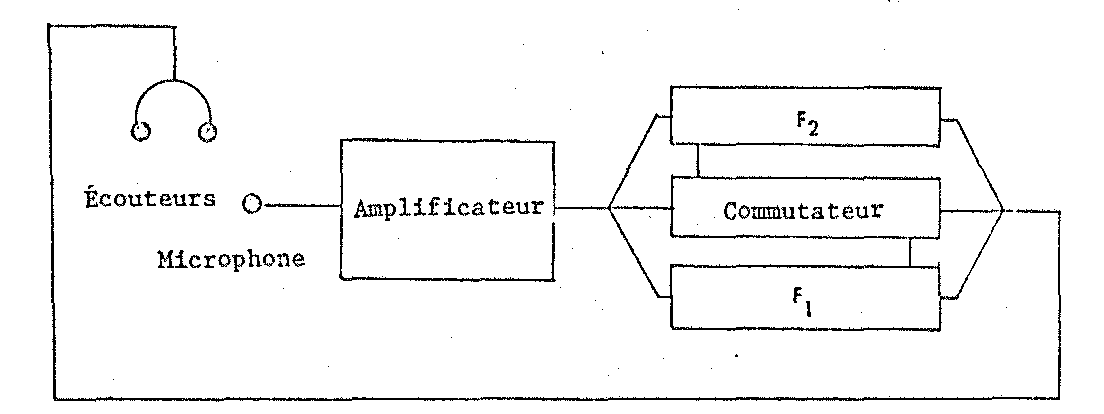
Figure 1 — facsimile p. 4
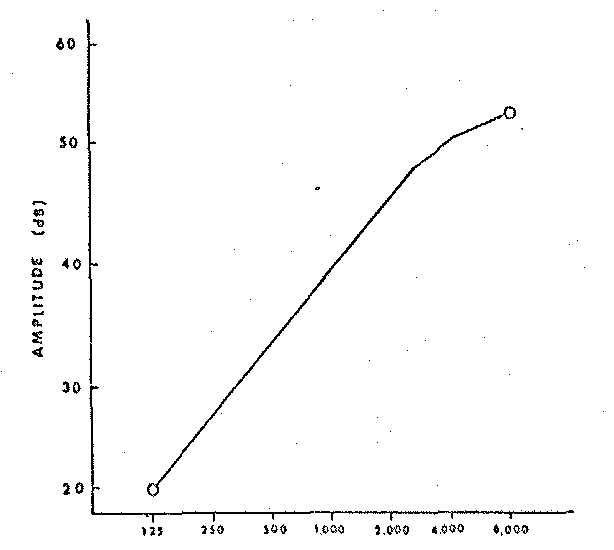
Figure 2 — facsimile p. 4
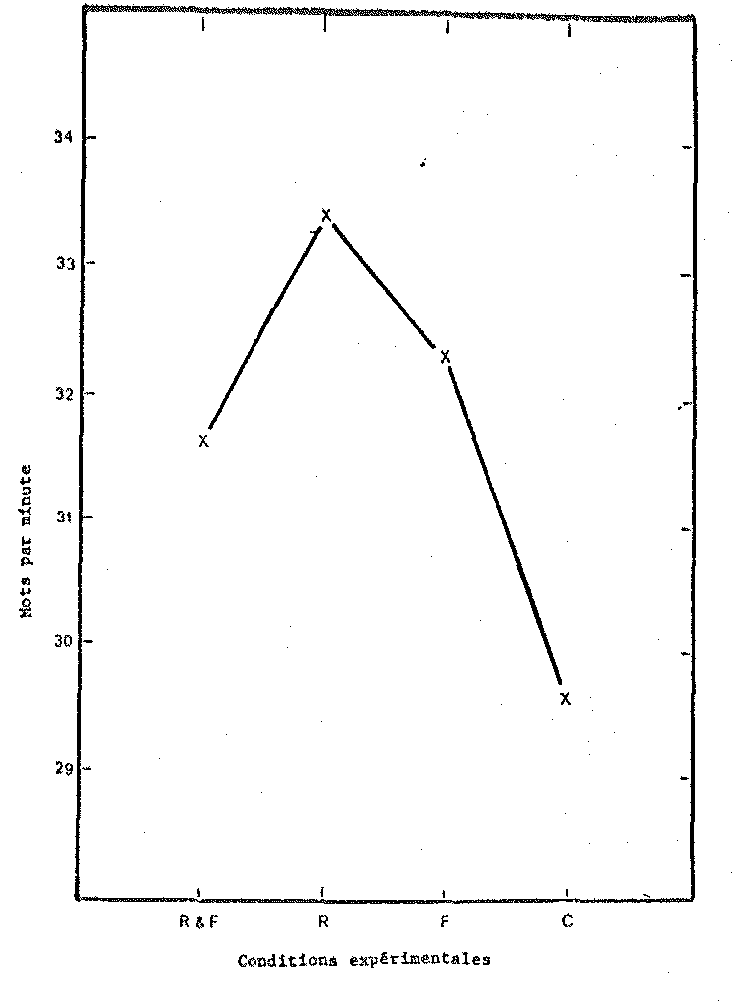
Figure 3 — facsimile p. 7
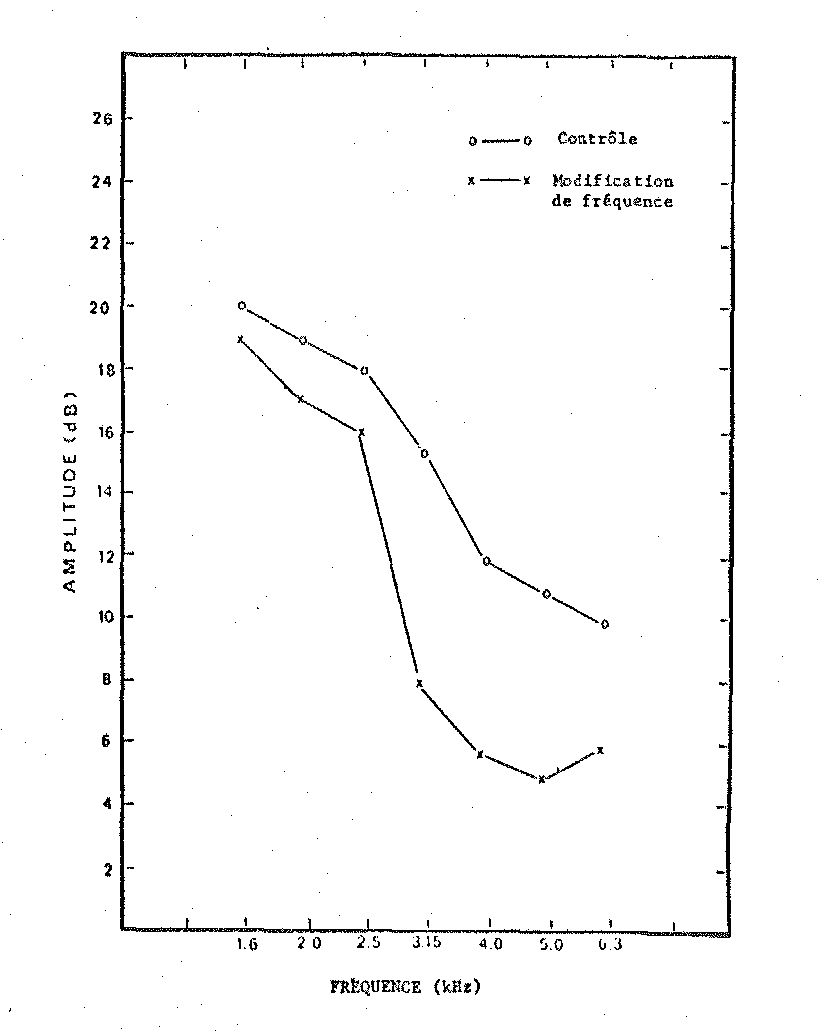
Figure 4 — facsimile p. 7